

An expanded workshop was held at the central office of the State Service on Control and Regulation in the Field of Transport, chaired by the Head of the Service, Kurbonzoda D.K., which was attended by deputy heads, heads of departments and departments, as well as heads of regional service structures in the regions via video link.
The meeting discussed in detail the implementation of the instructions of the Government of the Republic of Tajikistan and the Ministry of Transport, in particular, the issues discussed in the copy of the minutes of the meeting of the Government of the Republic of Tajikistan dated May 28, 2026, №5.
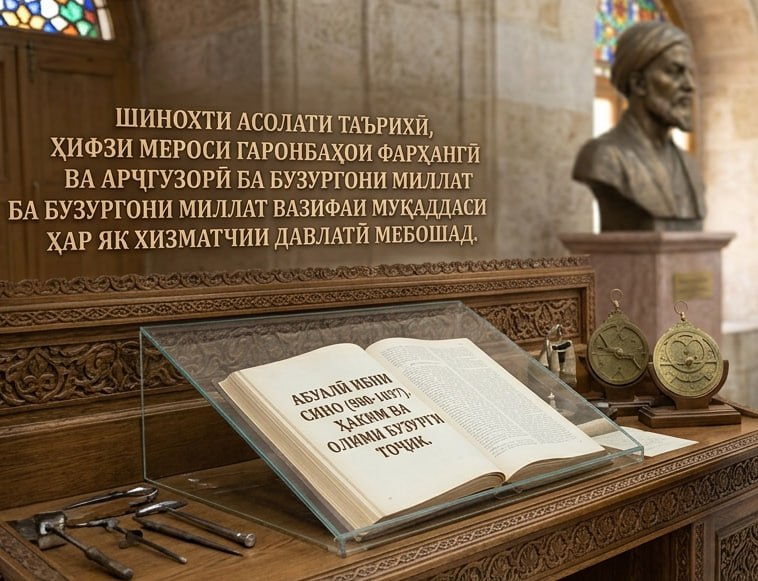
During his speech, the head of the Kurbonzoda D.K. service drew the attention of the participants to paragraphs 37 and 53 of the minutes of the government meeting and stated that the recognition of historical identity, the protection of valuable cultural heritage and the veneration of the great people of the nation is the sacred duty of every civil servant. At this meeting, strict instructions were given that the information that Alloma and the great sage of the East, Abu Khuair ibn Sino, contained in the Encyclopedia of the Tajik Council (1952), should be studied by all employees and managers of the service and widely used in organizational, educational and labor activities.
“Studying the life and scientific heritage of outstanding sons of the nation, such as Ibn Sinai, is not only a matter of our national pride, but also further strengthens the sense of patriotism and responsibility of workers in the field in the performance of their official duties,” the head of the service emphasized.
In order to fulfill the instructions of the Ministry of Transport of the Republic of Tajikistan in a timely manner, by a resolution of the working meeting, all departments and regional structural divisions were instructed to hold intra-industry meetings as soon as possible and submit a report on the results of work to the central office.
The fulfillment of these tasks and the course of his training in the structural divisions of the Service were under the strict control of the Service management.
