
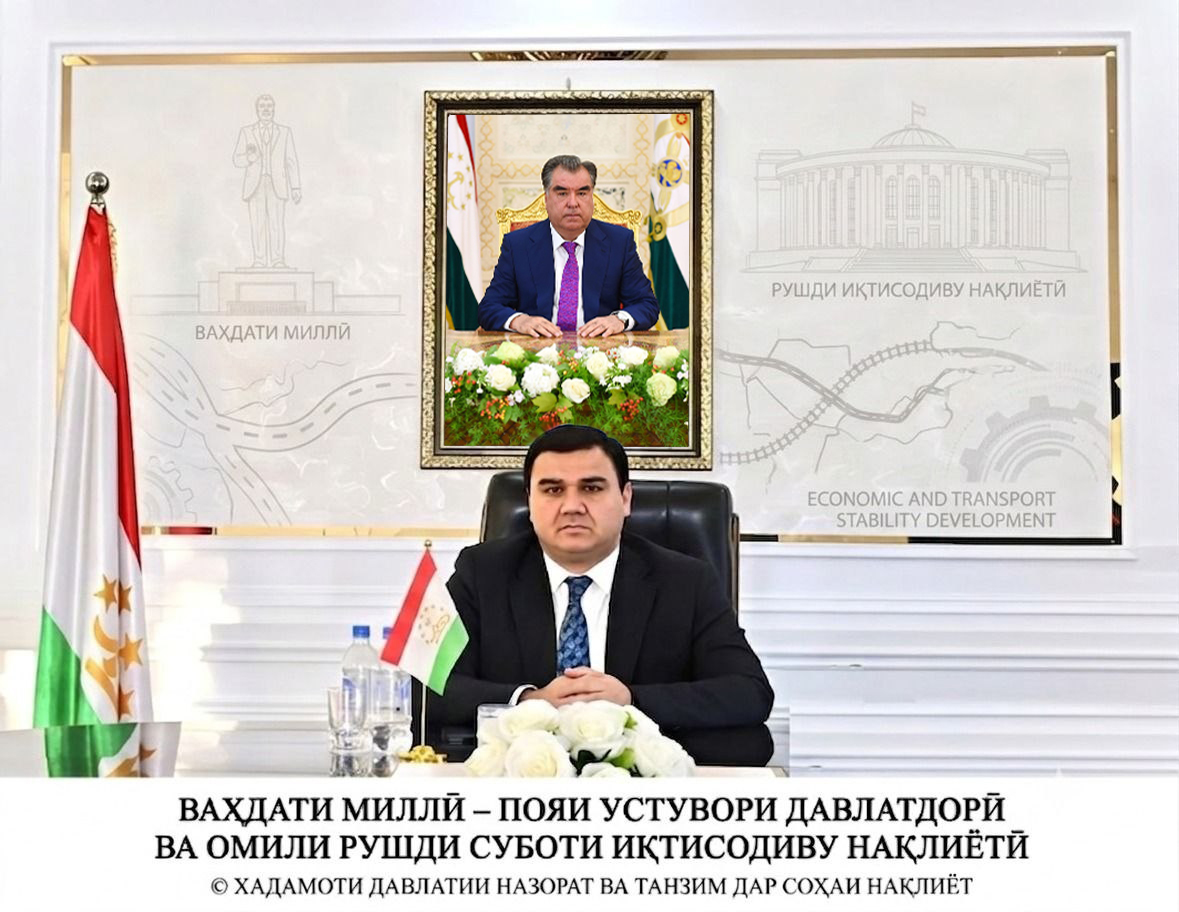
Kurbonzoda Daler Kurbon –
Head of the State Service on Control and Regulation in the Field of Transport
National unity is one of the greatest historical achievements of the Tajik people during the period of independence and is the basis for the sustainability of statehood and the main condition for the development of society. The experience of Tajikistan’s modern statehood has proved that progress and development of society, the taste of political stability and socio-economic development are possible precisely on the basis of peace, tranquility and mutual understanding of citizens.
If we look at the recent history of Tajik statehood, it becomes clear that the path to achieving national unity has not been easy. The first years of independence were overshadowed by political and social contradictions that dragged the young country into the maelstrom of civil war, which had a profound impact on the political, economic and spiritual life of society. This tragedy led to the deaths of tens of thousands of people, led to the emigration of hundreds of thousands of citizens and caused enormous damage to the national economy and the national economy.
In such sensitive and fateful circumstances, society needed a leader who could unite people and put an end to internal conflicts. The wise leader of the nation, the Founder of Peace and national unity, the Leader of the Nation, the President of the Republic of Tajikistan, the respected Emomali Rahmon, expressed the words from the first days of his activity:
“I will begin my work with peace and bring peace and tranquility to the suffering people of my country.”
The national unity and lasting peace of the Tajiks during eight rounds of negotiations and 24 meetings began in April 1994, after many years of difficult negotiations, on June 27, 1997, a general agreement on the establishment of peace and national accord was signed in Moscow, Russia. This fateful act put an end to armed resistance and prevented the threat of the disappearance of national statehood. Today, the peaceful experience of the Tajiks as a successful example of peaceful conflict resolution is recognized internationally and studied by the United Nations.
After signing the fateful agreement, the Government of the Republic embarked on a deep path to strengthen national unity and revive the national consciousness, traditions and culture of the Tajik people. During this process, the country’s Parliament adopted a number of important documents and laws that strengthened the legal framework of the society.
These legal and structural prerequisites allowed the industry legislation, including the system of control and regulation of the transport industry, to develop gradually in an atmosphere of peace and security and adapt to international standards.
National unity has created a favorable ground for the economic development of the country. It is only in a calm and stable atmosphere that it becomes possible to attract investments and implement major economic projects. International relations and Tajikistan’s independence policy have led to the need to build new internal and external roads.
During the period of independence, the tranquility and security provided by peace and unity laid solid foundations for the construction of huge structures and the prosperity of various sectors of the economy. At this stage:
– the economic and transport infrastructure of the country is significantly developed;
– The construction of international roads, tunnels, bridges and other strategically important facilities contributed to strengthening the country’s economic potential and Tajikistan’s way out of the traffic impasse.
The State Service on Control and Regulation in the Field of Transport, being one of the important state structures, today, based on these achievements, has directed its activities to ensure the legitimate control and regulation of vehicles and transport services, which is a direct result of the atmosphere of peace and unity in the country.
Over the years, the importance of national unity has become more and more tangible. Today, it is of key importance for sustainable development, ensuring security, improving the standard of living of the population and strengthening Tajikistan’s international standing.
Protecting and strengthening national unity is the sacred duty of every citizen of Tajikistan, including every employee of the country’s transport industry. We, the employees of the State Service on Control and Regulation in the Field of Transport, will direct all our efforts, knowledge and skills to the implementation of current legislation, sustainable development of the industry, ensuring the quality of services provided and protecting this invaluable asset — national unity, because the bright future of Tajikistan and the progress of the state depend on the solidarity of all citizens.
