
Every nation considers its outstanding children to be an invaluable gem of history and considers their shrines to be a sacred place. After gaining State independence, the Republic of Tajikistan has constantly sought to eliminate the historical wounds of the 20th century, including the humiliation and murder of prominent intellectuals and figures.
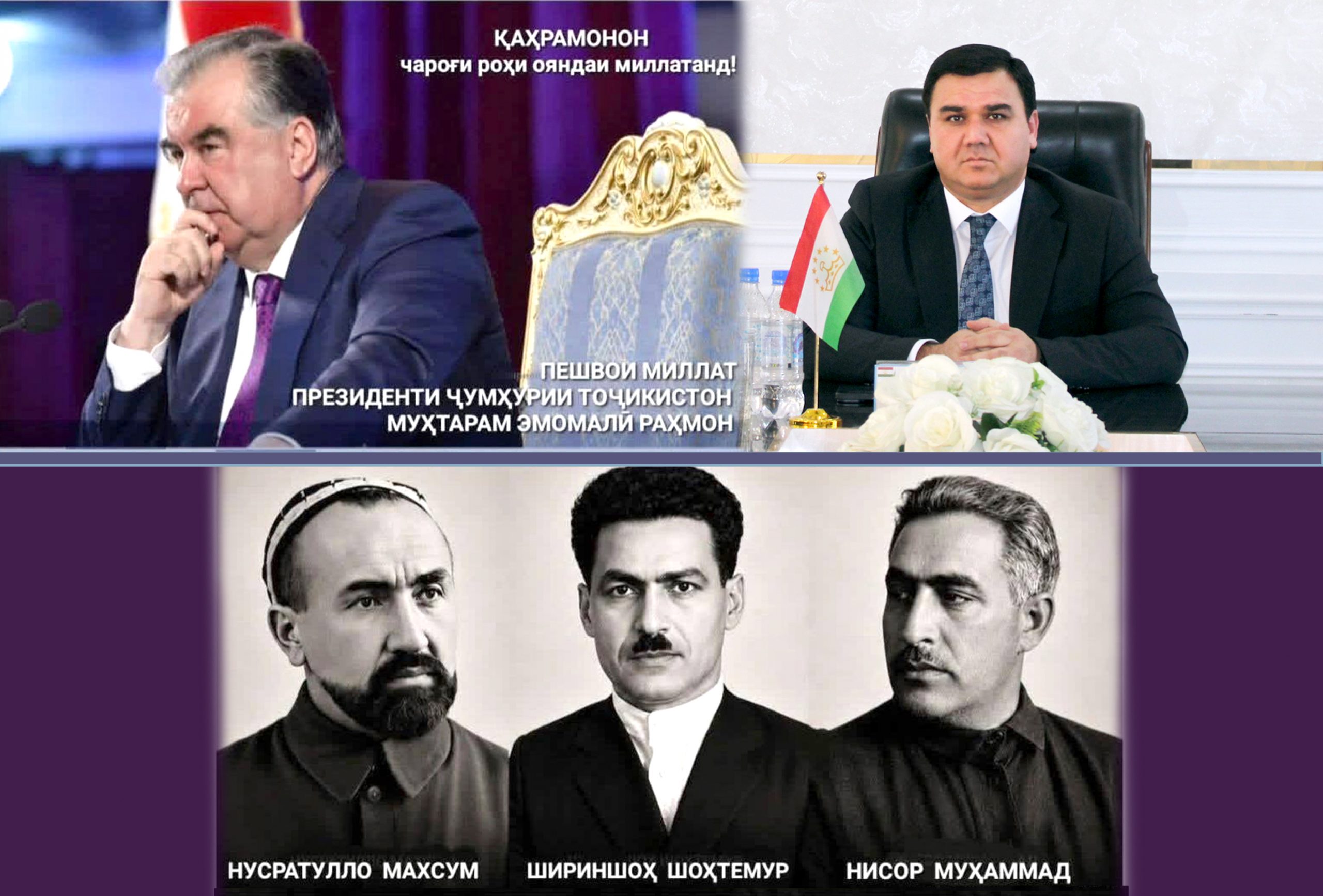
One of the most cultured and just acts in the policy of the President of the Republic of Tajikistan, Leader of the Nation Emomali Rahmon, was the return of the graves of three great national heroes, Nusratullo Makhsum, Shirinsho Shotemur and Nisar Muhammad, to their homeland on May 18-19, 2026. This historic act is considered a symbol of the revival of national identity, respect for the glorious past and the strengthening of modern Tajik statehood.
Images of heroes and their incarnations:
1. Nusratullo Makhsum (1881-1937): one of the founders of the Communist Party of Tajikistan, the first chairman of the Tajik Soviet Republic and a fighter for the national liberation path. He made an invaluable contribution to the establishment of Tajikistan’s independence as part of the USSR. It was thanks to his efforts that Tajikistan was recognized as a separate republic within the Soviet Union. In 2006, by Decree of the President of the Republic of Tajikistan, he was awarded the highest title of “Hero of Tajikistan”.
2. Shirinsho Shotemur (1899-1937): prominent statesman, Chairman of the Presidium of the Central Executive Committee of the Tajik Soviet Socialist Republic and the author of the first Tajik alphabet, who is considered the creator of the cultural policy of Tajiks in the early Soviet period. He was a staunch supporter of the development of the Tajik language and education. In 2006, he was also awarded the highest title of “Hero of Tajikistan”.
3. Nisar Muhammad (1887-1937): the first People’s Commissar of Education of the Tajik Soviet Socialist Republic, a thinker, journalist and public figure who was engaged in the promotion of National opinion and the fight against ignorance. The first textbooks and schools appeared thanks to his efforts, in 1923-1924 his books “Manual of Calculus” and “Alphabet” were published.
All three were executed during the years of political crimes of 1937-1938 and buried in a common grave at the Donskoy Cemetery in Moscow. The sanctuary has been away from the Homeland for more than eighty years, and compatriots have not had the opportunity to visit it.
On May 18, 2026, a solemn ceremony of receiving soil capsules from the graves of national heroes of Tajikistan took place at the Donskoy Cemetery in Moscow. On the instructions of the President of the Republic of Tajikistan, Dear Emomali Rahmon, the removal of soil from the graves was carried out on the direct instructions of the President of the Republic of Tajikistan, dear Emomali Rahmon. At the ceremony, the Tajik delegation was led by Minister of Foreign Affairs Sirodjiddin Muhriddin, and the Russian delegation was led by Deputy Minister of Foreign Affairs Mikhail Galuzin and Special Representative of the President of the Russian Federation Mikhail Shvidkoi. Two companies of the Honor Guards of the two countries took part in it. During the ceremony, it was stated that the initiative is aimed at restoring historical justice and returning the lands of the outstanding sons of the Tajik people to their homeland.
On May 19, 2026, President of the Republic of Tajikistan, Leader of the Nation Emomali Rahmon arrived at the Dushanbe International Airport and took part in the ceremony of receiving ground capsules from the sanctuary of national heroes. Honorary servicemen delivered dust capsules covered with the national flag of the Republic of Tajikistan to the airport. The President of the country expressed his respect to Nusratullo Makhsum, Shirinsho Shotemur and Nisar Muhammad, emphasizing their invaluable contribution to the creation of the Republic of Tajikistan.
After the ceremony at the airport, a funeral prayer was served in the Central Cathedral Mosque of Dushanbe, accompanied by an honorary caravan, and then funerals of national heroes were held at the Luchob cemetery in observance of Islamic traditions and honor.
The return of the burial ground of three national heroes to their homeland is of great importance in the policy of reviving national identity:
1. Historical Justice: This initiative is a vivid example of historical justice, in which the State recognizes and compensates for past oppression through symbolic actions. According to leading experts, this event became “a symbol of the victory of truth, the restoration of historical justice and the perpetuation of the memory of the faithful sons of the people.”
2. National unity: This process helps to strengthen national unity. The special attention of the Leader of the nation to the study of the historical merits of the outstanding sons of the Motherland became the basis for the revival of national pride.
3. Fostering Patriotism: This practice promotes patriotism among the younger generation. In the future, the soil capsules will become part of the National Memorial Complex of the Republic of Tajikistan, symbolizing the connection of generations.
From the point of view of legal science, this process is a unique symbolic movement in interstate cooperation. It was carried out within the framework of the agreement between the Government of Tajikistan and Russia on cultural and scientific cooperation and in accordance with the Law of the Republic of Tajikistan “on Intangible Cultural Heritage”.
The return of the shrines of Nusratullo Mahsum, Shirinsho Shotemur and Nisar Muhammad to their homeland has become a golden page in the history of Tajik statehood. This humane act showed that independent Tajikistan is steadfast in defending its national values, and the Motherland will never forget its selfless children.
Kurbonzoda Daler Kurbon
– Head of the State Service on Control and Regulation in the Field of Transport
